Whoa! Seriously? Yep. I did not expect to like another wallet so much. At first glance Rabby looks like just another extension, but it grew on me fast. My instinct said “try it” and I did—no grand plan, just curiosity.
Hmm… here’s the thing. The interface is clean and fast. Navigation is straightforward. It doesn’t hide options behind cryptic menus like some wallets do—which is very very important when you’re juggling many chains. Initially I thought it would be another flashy product, but then I realized the team focused on usability and risk controls instead of bells and whistles.
Wow! Small features can matter. The transaction simulation caught my eye. It shows potential slippage and gas spikes before you confirm, which reduced my heartburn when bridging assets. On one hand it simplifies choices for new users; though actually it still gives pro users the low-level controls they want, so it’s a nice balance.
Okay, so check this out—Rabby isn’t just about pretty UX. It includes built-in protections for DeFi interactions. For example, it can block token approvals above a set threshold and show you which approvals are active. That feature saved me from a sketchy token once; I probably would have missed it otherwise, and yeah, I’m biased, but that part bugs me when other wallets ignore it.
Hmm. I want to be clear. I do not claim Rabby is perfect. There are little rough edges. Some network switching behavior can be jumpy, and sometimes the extension asks to reconnect dapps more than I’d like. Actually, wait—let me rephrase that: reconnect prompts feel frequent, but that’s the trade-off for improved security boundaries between sites and accounts.
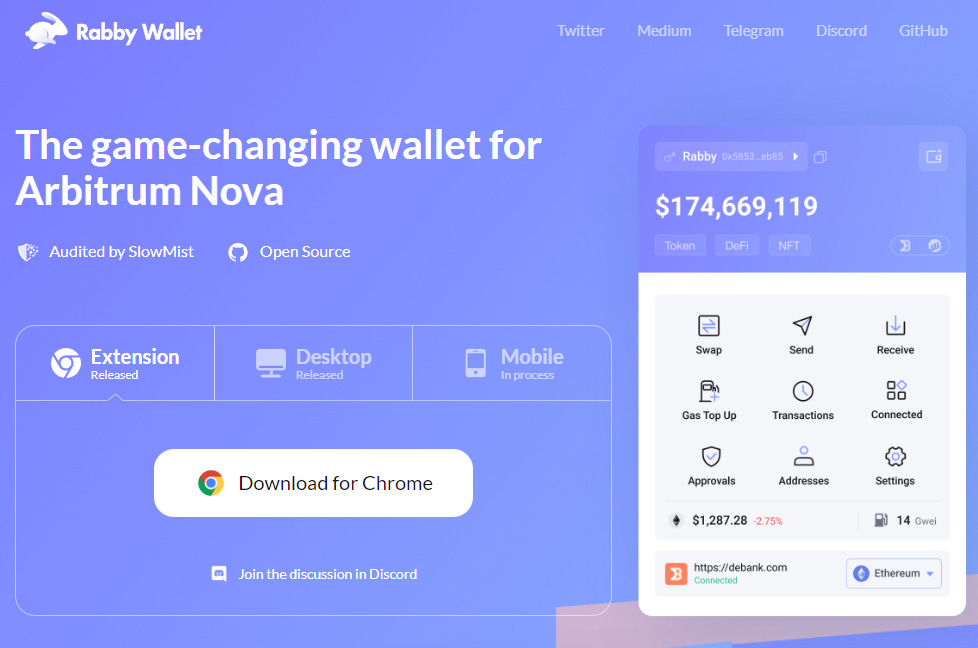
What makes Rabby a practical DeFi wallet for everyday use
Here’s what I appreciate most. It reduces risk without getting in the way. The wallet’s “approval manager” and transaction protection are designed for DeFi power users, yet newbies understand the basics fast. I’ll be honest: using Rabby felt like a sigh of relief after tinkering with more bare-bones wallets for months. If you want to try it yourself, the official download and setup walkthrough is here: https://sites.google.com/cryptowalletextensionus.com/rabby-wallet-download/
Something felt off when I first connected to a new dapp. The popup flow and warnings nudged me to re-evaluate the transaction. Those micro-confirmations might feel annoying at first. But they stop a lot of rash clicks. On one hand you gain safety; though actually the slight friction reduces dumb mistakes, which in DeFi can be costly.
Whoa! Security first. The wallet separates accounts and uses per-site permissions. That isolation reduces the blast radius when a site is compromised. My instinct said “this is smarter than it looks” because it avoids the all-or-nothing permission model that older extensions use. Initially I thought that was overkill, but after a few close calls on sketchy dapps, I got it.
Really? Performance matters too. The extension is lightweight and doesn’t choke my browser. I keep many tabs open when researching tokenomics and bridges, and Rabby stayed responsive. For folks living in-browser all day, that matters more than hypey features. Also, the UI scales nicely across accounts so you don’t lose track; that’s one of those small wins that adds up.
Hmm… a quick note about compatibility. It supports major EVM chains out of the box and many sidechains. That meant I could jump between mainnet trades and L2 operations without reinstalling multiple wallets. There’s also a hardware wallet integration which I used for larger holdings—felt safer to keep cold keys out of the extension environment. On the flip side, not every niche chain is supported yet, so you’ll want to check before planning a complex strategy.
Here’s what bugs me about some products. They promise “auto-save gas” or “smart routing” but actually hide the costs. Rabby is pretty transparent about fees and trade routes. Its advanced mode surfaces gas estimates and lets you tweak parameters. I’m not 100% sure the estimations will always be perfect, but the clarity helps you make more informed calls.
On user experience: the onboarding is approachable. You create or import a wallet in a few steps and the extension walks you through key safety steps. I added an account from a seed phrase, then later connected my hardware wallet—both flows were smooth. There’s still room for clearer language in a couple of tooltips, but overall it feels polished.
Initially I thought the competition would outpace Rabby on integrations. Yet, over time, Rabby kept adding features that real users actually need. That evolution told me they listen to feedback. Something about that felt refreshingly pragmatic; many projects chase vanity metrics instead.
One small gripe: occasional translation strings look rough in the UI. It doesn’t break function, but it reduces that “finely crafted” sheen. Also, there are moments where the extension asks to reconnect, like I said earlier—small friction in exchange for compartmentalized security. I’m not 100% sure whether it’s necessary every time, but I’d rather deal with a prompt than a lost wallet.
FAQ
Is Rabby safe for large holdings?
Short answer: yes with caveats. Use hardware wallet integration for big amounts and keep small daily funds in the extension. Rabby’s permission controls lower risk, but no software-only wallet is infallible; treat it like a tool in your security toolbox.
Does Rabby support all DeFi dapps?
Not every single one. It supports the major EVM dapps and many L2s, but some niche chains or experimental protocols may not work. If you’re planning an elaborate strategy, test with small amounts first—seriously, test small, then scale.
How does Rabby compare to other browser wallets?
Rabby leans into pragmatic safety and clear UX over flashy add-ons. On one hand it’s more protective than some mainstream wallets; on the other hand it may add slight friction that very casual users find annoying. Overall I find the trade-off worth it.